



Health Literacy and HIV: Understanding the Tools in the HIV Prevention Toolbox
Summary:
Increasing health literacy is something we should promote year round, including health literacy about HIV prevention. When we work to increase people’s health literacy about HIV prevention by empowering them with information, they can take charge of their health. Our latest blog post does this by making the tools in the HIV prevention toolbox easy to understand and accessible.
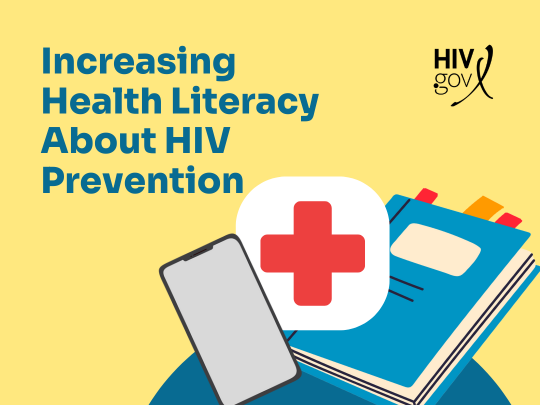
Health literacy is important all year, especially when it comes to health literacy about HIV prevention. HIV prevention is something everyone should understand, so they can be empowered to take charge of their health. But HIV prevention is a topic that may be unfamiliar to some people who could benefit from information about the range of highly effective HIV prevention tools available today. Even if a health care provider doesn’t bring it up, it’s important for everyone to understand that they might benefit from asking for this care. That’s why improving health literacy can help.
Health literacy is the ability to find, understand, and use health information to make informed decisions. It plays a powerful role in HIV prevention. Understanding HIV prevention options can help people feel more confident using them and taking control of their health.
Read more about HIV prevention tools:
PrEP
PrEP, or pre-exposure prophylaxis, is medicine that can prevent someone from getting HIV from sex or injection drug use when taken as prescribed before a possible HIV exposure. It is prescribed by a doctor for people who don’t have HIV, so they can start taking it ahead of time to protect themselves from future exposures to HIV.
PrEP is available in different forms: It can come as a pill that is taken daily, or as an injection from a health care provider either every 2 months or every 6 months. It’s important to commit to taking PrEP the right way. PrEP’s effectiveness relies on taking the medication as prescribed to ensure there is enough medicine in the bloodstream to stop the virus from spreading. Individuals who are thinking about PrEP can talk to a health care provider about whether PrEP is right for them and about which type of PrEP might be best based on their care preferences and insurance coverage. Even people without insurance can get access to PrEP through pharmaceutical programs.
Find more information about PrEP, including where to find it, on HIV.gov’s Pre-Exposure Prophylaxis page.
PEP
PEP, or post-exposure prophylaxis, is medicine taken immediately after a possible exposure to HIV to prevent the virus from taking hold in the body. It’s meant to be used in emergency situations, and not on a regular basis. It’s available as daily oral HIV pills and must be taken for 28 days. All doses must be taken as prescribed to give PEP the best chance of working.
With PEP, timing is important. The sooner PEP is started after a possible HIV exposure, the better the chance it will prevent infection. Ideally, it should be taken within 24 hours, but it must be started within 72 hours of the exposure. Learn more about PEP, including where to get it, on HIV.gov’s Post-Exposure Prophylaxis page.
Treatment as Prevention
Another tool for HIV prevention is for a person with HIV to take HIV medicine, called antiretroviral therapy (ART), as prescribed and to get to an undetectable viral load—a very low level of HIV in the blood—and keep it that way. A person who was diagnosed with HIV and started treatment resulting in an undetectable viral load will not transmit HIV to their HIV-negative partners through sex. ART is also critical to help a person with HIV take care of their health and live a long and healthy life.
Get more information about HIV treatment on HIV.gov’s HIV Treatment as Prevention page.
Use Condoms the Right Way Every Time You Have Sex
When used the right way, condoms are a highly effective tool for preventing HIV. They also help prevent some other sexually transmitted infections (STIs) such as gonorrhea and chlamydia. Information about the right way to use a condom can be found in the Centers for Disease Control and Prevention’s (CDC) Preventing HIV with Condoms page.
Our HIV Services Locator can help people find PrEP, PEP, HIV medicine, and condoms nearby: https://locator.hiv.gov/.
More Ways to Prevent HIV Related to Sex
There are several other ways you can decrease your chance of getting HIV:
- Choose sexual activities with a lower risk of passing on HIV, such as oral sex or sexual activities that don’t involve contact with semen, vaginal fluid, or blood.
- Decide not to have sex (“abstinence”), which is an 100% effective way to make sure you won’t get HIV through sex. It also prevents other STIs and pregnancy. Choosing not to have sex could happen at different times in one’s life for different reasons.
- Getting tested and treated for other STIs can help prevent HIV, since many STIs can make a person more likely to give HIV or to get HIV if they are exposed to it.
Preventing HIV Related to Drug Use
Not injecting drugs is a 100% effective way to avoid HIV through injection drug use. For people who want to stop injecting drugs but are having trouble doing that, there is help available. Find a treatment center at FindTreatment.gov or SAMHSA.gov.
People who inject drugs should never share needles, syringes, or other drug injection equipment because they may have blood in them, and blood can carry HIV and other viruses like hepatitis C. Use new, clean syringes and injection equipment every single time. Syringes may also be available at some pharmacies without a prescription.
When It Comes to Health, Knowledge is Power
We all deserve a healthy life, and taking steps to increase health literacy is a great way to take charge of your own health. It’s important to ask a provider questions about HIV prevention so that you can get the information and treatment you need—your health is worth it. When health care providers and patients work together on good communication, everyone benefits.
To learn more about HIV prevention, testing, treatment, and care, visit HIV.gov’s HIV Health & Wellness section for trusted information.