






Exploring Syndemics: PACE Visits the ATHENA Program at University of Maryland, Baltimore
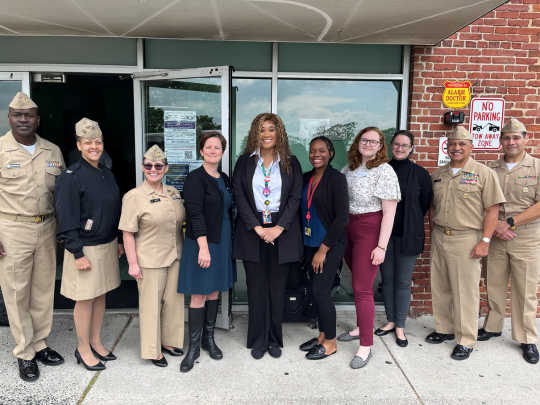
Prevention through Active Community Engagement (PACE) officers held a listening session earlier this year with leaders of the University of Maryland, Baltimore’s ATHENA program, a Substance Abuse and Mental Health Services Administration grant recipient. The visit is part of PACE’s work in partnership with federal agencies and non-federal organizations to support regional Ending the HIV Epidemic efforts.
An interdisciplinary health consortium, ATHENA includes a methadone clinic where medical staff screen for HIV and hepatitis and administer hepatitis vaccinations. The program serves women, but the operating space at the clinic serves everyone. Youth who arrive are referred to a teen program nearby. Some women have substance use disorders, mental health issues, infectious diseases like HIV and HCV, and histories of poverty and trauma, according to Wendy Potts, ATHENA Program Coordinator.
“Treatment is essential to address their needs,” Ms. Potts said. “The Athena program is designed to meet with women about their specific concerns and tailor the educational sessions in a client-centered way. This breaks their individual goals down into more manageable and achievable small steps instead of large leaps that lead to failure.”
Ms. Potts said they cannot underestimate the importance of peer support specialists or peer navigators. “They bring a unique lived experience that clients can relate to and feel connected with,” she said. “Combining clinical and peer support has been a needed valuable balance.”
Developing Creative Solutions
In recent years, the program’s challenges have mostly been related to COVID. During the pandemic, medical staff had to determine how to provide methadone and develop creative ways to continue engaging clients virtually. Hiring also was a challenge due to competition in the marketplace.
ATHENA tries to meet clients where they are and make it a one-stop shop during their limited time. Thirty minutes is the standard timeline, and there sometimes is a challenge getting people to stay for other services available.
“We could have just given uniform immunizations, but from a public health standpoint, we needed individualized patient care and treatment indicated for each client,” said Aaron D. Greenblatt, MD, Medical Director, University of Maryland Medical Center Addiction Treatment Programs. “Clients could finally feel empowered to work with a familiar team to make a decision about something on their own.”
More than half of the people in the substance abuse disorder program are engaged in primary and mental health services as well. Methadone clinic staff administer psychiatric medication and electronically track the medications patients are receiving.
“Administering an opioid treatment program may be seen as restrictive and coercive, but an advantage is if clients are unstable, they can access the services six days a week and know where they can go for consistent care,” Dr. Greenblatt said.
The clinic is on a bus route, but transportation can be an issue for some clients. There is an asynchronous directly observed therapy (DOT) platform for individuals who lack transportation and are not able to take medications on site. Clients appreciate having video-based DOT rather than in-person supervised dosing.
Poised for the Future
As the ATHENA team looks to the future, the program is poised to respond to syndemics and optimize their services. They are considering how to help people meet their basic survival needs by connecting them with resources. ATHENA has an internally funded pilot grant for housing, and intimate partner violence outreach is underway. They also are looking at how to help people become re-integrated with society and have meaningful social relationships and connections.
ATHENA’s work aligns with PACE’s aim to maintain a high quality of life and wellness for all people, where every individual has an equitable chance to obtain any necessary screening, diagnosis, and treatment/care services.