





Symptoms of HIV
Summary
- HIV often causes flu-like symptoms in its earliest (acute) stage, but not everyone has the same signs or symptoms, and some people have no symptoms at all.
- The only way to know for sure if you have HIV is to get tested and know your status so you can keep yourself and your partner(s) healthy.
- Use the HIV Services Locator to find HIV testing near you.
What Are the Signs and Symptoms of HIV?
HIV has a range of signs and symptoms. Not everyone will have the same symptoms. It depends on the person and what stage of the disease they are in.
HIV has three stages: acute infection, chronic infection, and AIDS. Each stage has different symptoms, and some people might have no symptoms at all. The symptoms of acute HIV infection are generally similar for men and women.
Below are just some of the signs and symptoms someone might have during acute infection, the earliest stage of HIV. Many of the symptoms of HIV can also be caused by other illnesses. Don’t assume you have HIV just because of these symptoms. The only way to know for sure if you have HIV is to get tested.
Within 2 to 4 weeks after HIV infection, during the acute infection stage, about two-thirds of people will have flu-like symptoms. This is the body’s natural response to infection. Symptoms of acute HIV infection can include the following:
- Fever
- Chills
- Rash
- Night sweats
- Muscle aches
- Sore throat
- Fatigue
- Swollen lymph nodes
- Mouth ulcers

During the acute stage, symptoms can last anywhere from a few days to several weeks. Some people don’t have any symptoms at all during this early stage of HIV.
Without treatment, HIV will usually progress from acute to chronic HIV infection, and then to AIDS (acquired immunodeficiency syndrome). A person with chronic HIV infection may not feel sick or have any symptoms. If the virus progresses to AIDS, a person will generally have more severe symptoms and be more likely to get very sick from other illnesses.
Learn more about the progression of HIV from acute infection to chronic infection to AIDS.
How Can You Tell If You Have HIV?
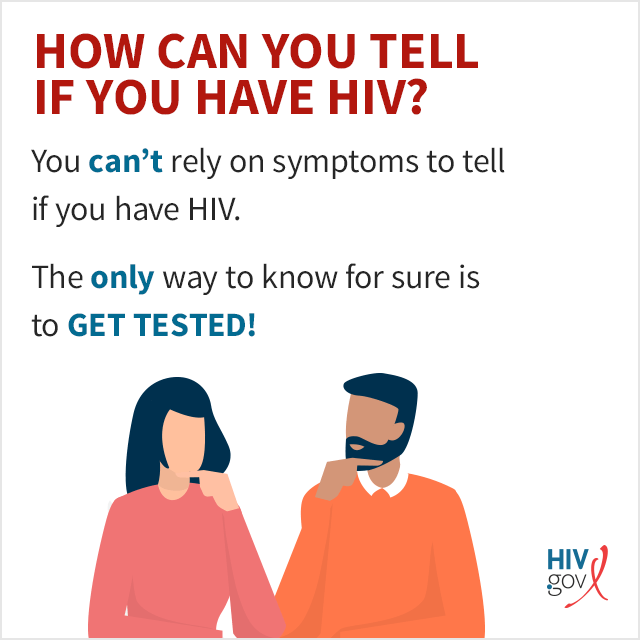
The only way to know for sure if you have HIV is to get tested. You can’t rely on signs and symptoms to tell whether you have HIV.
Knowing your HIV status gives you powerful information so you can take steps to keep yourself and your partner(s) healthy.
If you test positive, you can take medicine to treat HIV. Taking HIV medicine (called antiretroviral therapy or ART) as prescribed can help lower the amount of HIV in the blood to a level that is too low to be detected in a standard lab test. This is called an undetectable viral load. People who take HIV medicine as prescribed and get and keep an undetectable viral load can live long and healthy lives and will not transmit HIV to their HIV-negative partners through sex.
If you test negative, there are more HIV prevention tools available today than ever before. Pre-exposure prophylaxis (PrEP) is medicine people at risk for HIV can take to prevent getting HIV from sex or injection drug use. Post-exposure prophylaxis (PEP) is HIV medicine that should be taken within 3 days (72 hours) after a possible exposure to prevent the virus from taking hold.
If you are pregnant, you should get an HIV test so you can start treatment if you test positive for HIV. If you have HIV, taking HIV medicine as prescribed throughout your pregnancy and childbirth and giving HIV medicine to your baby for 4 to 6 weeks after birth can lower the risk of passing HIV to your baby to less than 1%. Taking HIV medicine will protect your health, too.
How to Get Tested for HIV
If you think you may have been exposed to HIV, get an HIV test, whether you have symptoms or not.
Find an HIV testing site near you
You can get an HIV test at your primary care provider’s office, your local health department, a health clinic, or many other places. Use the HIV Services Locator to find an HIV testing site near you.
Self-test for HIV at home
HIV self-testing is also an option. Self-testing allows people to take an HIV test and find out their result at home or in another private location. You can buy a self-test kit at a pharmacy or online, or your health care provider may be able to order one for you. Some health departments or community-based organizations also provide self-test kits at a reduced cost or for free.
Request an HIV test for recent infection
Most HIV tests detect antibodies (proteins your body makes as a reaction to HIV), not HIV itself. But it can take a few weeks after you have HIV for your body to produce these antibodies. There are other types of tests that can detect HIV infection sooner. Tell your doctor or clinic if you think you were recently exposed to HIV and ask if their tests can detect early infection.
Know your HIV status
After you get tested, be sure to learn your test results. If you test positive, see a health care provider as soon as possible so you can start treatment with HIV medicine. Be aware: When you are in the early stage of infection, you are at very high risk of transmitting HIV to others. It’s important to take steps to reduce your risk of passing HIV to others. If your test is negative, there are prevention tools like PrEP that can help you stay negative.